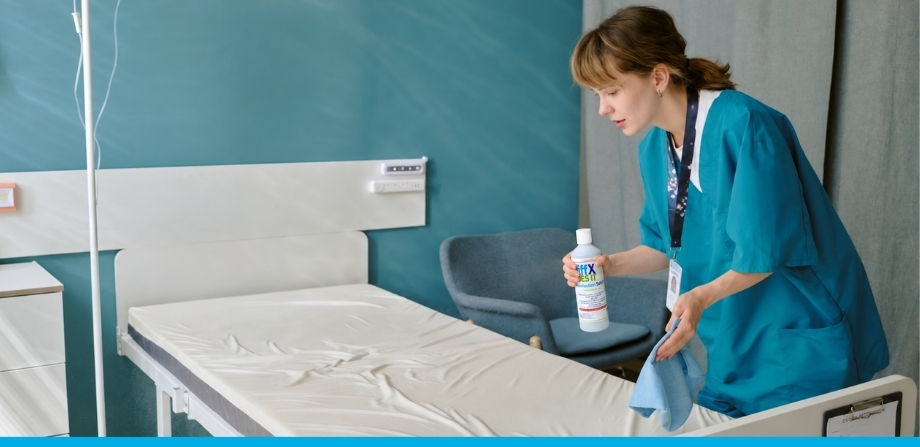
Findings provide further evidence for equipment longevity, reduced waste, and effective infection prevention.
MTP Innovations and a manufacturer of mattress covers supplied to the NHS have welcomed the findings of two independent testing programmes examining the effects of DiffX™ on healthcare mattress cover materials.
The studies were undertaken to evaluate the performance of DiffX™ on polyurethane (PU) coated hospital mattress cover fabrics under extended exposure conditions. The results provide further evidence supporting the use of DiffX™ on healthcare mattress covers and reinforce the benefits of pH-neutral disinfection within healthcare environments.
The findings are particularly relevant as NHS organisations increasingly seek alternatives to chlorine-based products, many of which are known to contribute to material degradation over time.
Building the evidence base
Testing was carried out by two separate facilities, leaving DiffX™ solution on the mattress cover fabric across exposure periods of 24, 48, 72 and 96 hours.
The reports concluded that DiffX™ does not confer a significant change to the surface appearance of PU-coated hospital mattress cover fabrics and does not reduce the water pressure resistance of the material.
There was no functional effect on the material coating based on measurements of weight, tensile strength and water resistance.
The findings support the suitability of DiffX™ for use on this manufacturer’s mattress cover materials and contribute to a growing body of evidence around the benefits of pH-neutral cleaning and disinfection products.
As organisations committed to improving outcomes across healthcare environments, the testing formed part of a collaboration between MTP Innovations and a specialist manufacturer of pressure care and healthcare mattress solutions.
Why pH neutrality matters
DiffX™ was the first peracetic acid (PAA) disinfectant sachet introduced into the NHS and remains unique as a pH-neutral PAA cleaner and disinfectant used in clinical settings.
Unlike many traditional disinfectants, its pH is comparable to that of tap water, making it non-corrosive while maintaining efficacy across the full pathogen spectrum, including viruses, bacteria, fungi, yeasts, mycobacteria and spores.
For healthcare providers, this means effective infection prevention without exposing valuable surfaces and equipment to unnecessarily harsh chemistry.
Previous testing has also demonstrated suitability for use on stainless steel, laminates, silicone sealants, plastics and microfibre cloths.
Supporting sustainability and value for money
The implications extend beyond infection prevention. Healthcare providers are under increasing pressure to maximise the lifespan of equipment, reduce waste and support NHS Net Zero ambitions. Products that contribute to premature deterioration can increase replacement costs and environmental impact.
Mike Jepson, Managing Director, MTP Innovations, believes the findings highlight the importance of considering both efficacy and equipment preservation when selecting cleaning and disinfection products: “Healthcare organisations should not have to choose between effective infection prevention and protecting valuable assets. The independent findings add to the evidence supporting a pH-neutral approach that delivers both.
“For more than 14 years, healthcare organisations have trusted DiffX™ because it provides effective disinfection without the material compatibility challenges often associated with chlorine-based products. As sustainability becomes an increasingly important consideration, extending the life of equipment and reducing waste can deliver significant benefits for NHS trusts.”
For more information or to request a copy of the report, email info@diffxdoesit.com.
